Baby Timeline
Record your baby's growth on their own custom domain—no app required.
Baby Timeline
A minimalist system for recording your baby’s photos, journals, and milestones—designed for real families, not social networks.
Background (Why)
My brother and his wife had a baby girl in early 2026. I wanted to give them something meaningful for the baby’s first-month celebration—something that would last longer than a toy or clothes.
So I bought a domain name using the baby’s name and decided to build a private website just for her. Not a public social media profile. Not an app store download. Just a quiet little corner of the internet where the family could watch her grow.
As I was building it, I started wondering: could this be a business? Could I offer this service to other parents? A personalized domain, a private timeline, a digital keepsake—no ads, no algorithm, no strangers.
It felt like there might be a gap in the market. Most baby tracking apps are either too complicated or too social. But a custom domain for your baby? That felt special.
What I Built (What)
I built an MVP in just 3 days using a fully serverless architecture.
Architecture:
Frontend (Static: Cloudflare Pages)
        |
        v
Cloudflare Worker (API/BFF & Proxy)
        |
        +--> Supabase Postgres (metadata: entries / media)
        |
        +--> Cloudflare R2 (private storage, no public access)
Core Features:
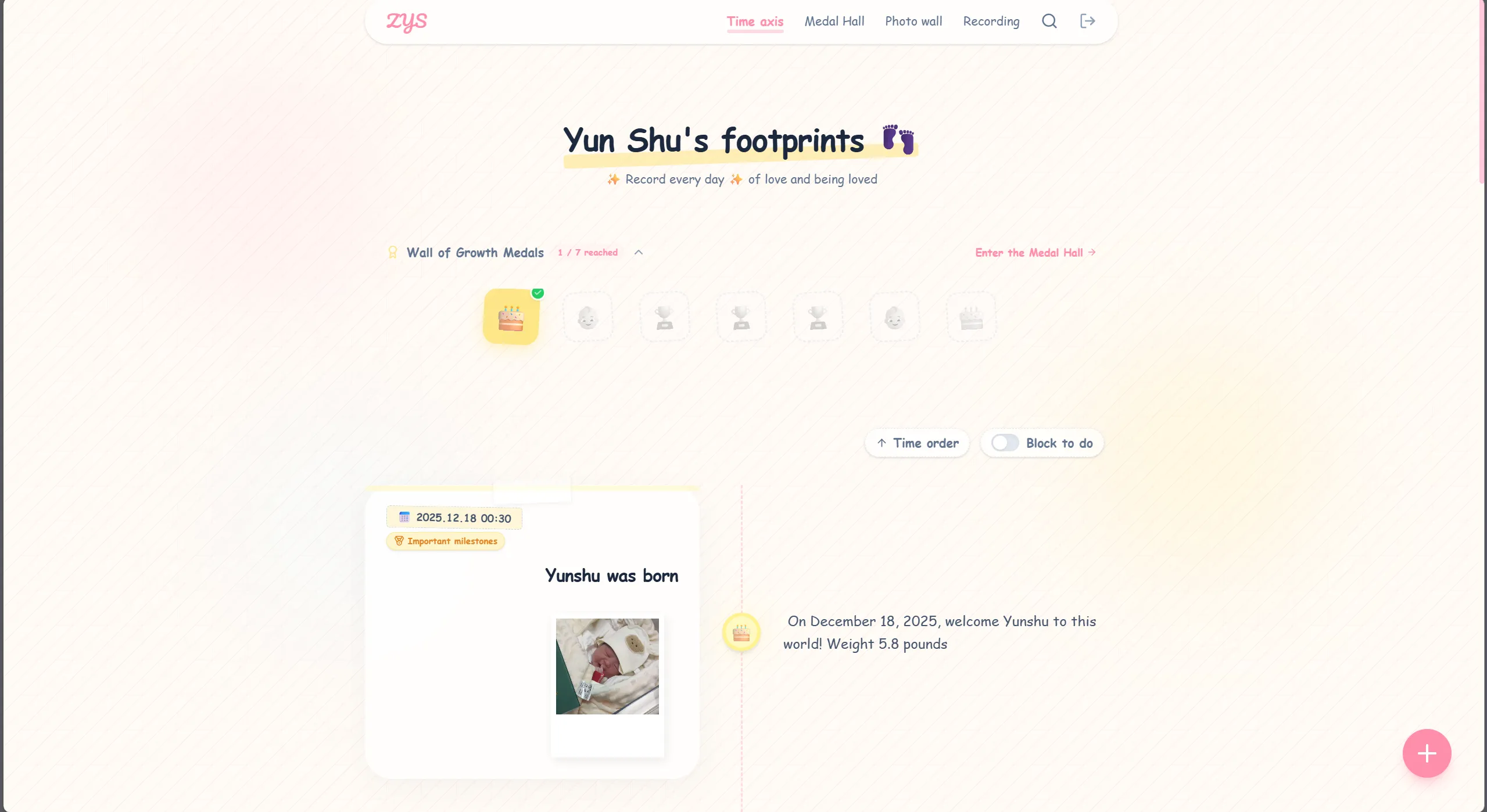
- Photo uploads with captions and timestamps
- Daily journal entries to record milestones and memories
- Timeline view that displays everything chronologically
- Password-only access—no registration, no user accounts, no friction
- Privacy-first design—all media stored in private R2 buckets, not exposed to the public internet
Tech Stack: Cloudflare Pages, Workers, R2, Supabase
Duration: 3 days (January 16-18, 2026)
Outcome (Result)
I sent the website URL to my brother. He said it was amazing. He said it was really well done.
But he didn’t really use it much.
I checked the analytics. Maybe a handful of visits. It’s still sitting there, password-protected, waiting.
To be fair, the baby is only a month old. Maybe they’ll come back to it later. Or maybe they won’t.
Key Takeaways
This project taught me something important about the difference between building a product and building for a business.
It’s an Emotional Product, Not a Utility: Baby timelines are about feelings, not efficiency. People don’t adopt them because they solve a painful problem—they adopt them because they feel meaningful. That’s a different kind of product challenge, and one I’m not sure I’m built for.
The Domain Name Angle Is Interesting, But Unvalidated: Using a personalized domain (like baby-name.com) felt unique. I still think there’s potential there. But I only tested it with one family—my own brother. I don’t actually know if other parents would care about owning their baby’s domain. It’s all just speculation.
Web vs. App Entry Points: Most people are used to opening an app on their phone. Typing in a URL—even a custom domain—adds friction. On mobile especially, bookmarking a website just doesn’t feel as natural as tapping an app icon. I didn’t test this assumption, but I suspect it’s a real barrier.
The Gift Worked, The Product Didn’t: As a one-time gift, this was perfect. I made something personal, and my brother appreciated it. But as a product—something I’d want to maintain, market, or charge for—it doesn’t fit my interests. I prefer building tools with clear utility, not emotional keepsakes.
I Over-Extrapolated from One Data Point: I saw my brother’s reaction and immediately started thinking about scaling this into a business. But I didn’t validate demand. I didn’t talk to other parents. I didn’t test pricing. I just assumed.
Current Status
Status: Archived The site is still live on Cloudflare Pages (since hosting is essentially free). My brother’s family can still access it anytime.
I’m not planning to turn this into a commercial product. It doesn’t align with the kind of work I enjoy.
If you’re considering building something similar: start by talking to 10 parents. See if they actually want a custom domain for their baby. Test whether they’d prefer a web-based timeline or a mobile app. Don’t assume, like I did.
The code is open-source on GitHub if you want to fork it or learn from the architecture.